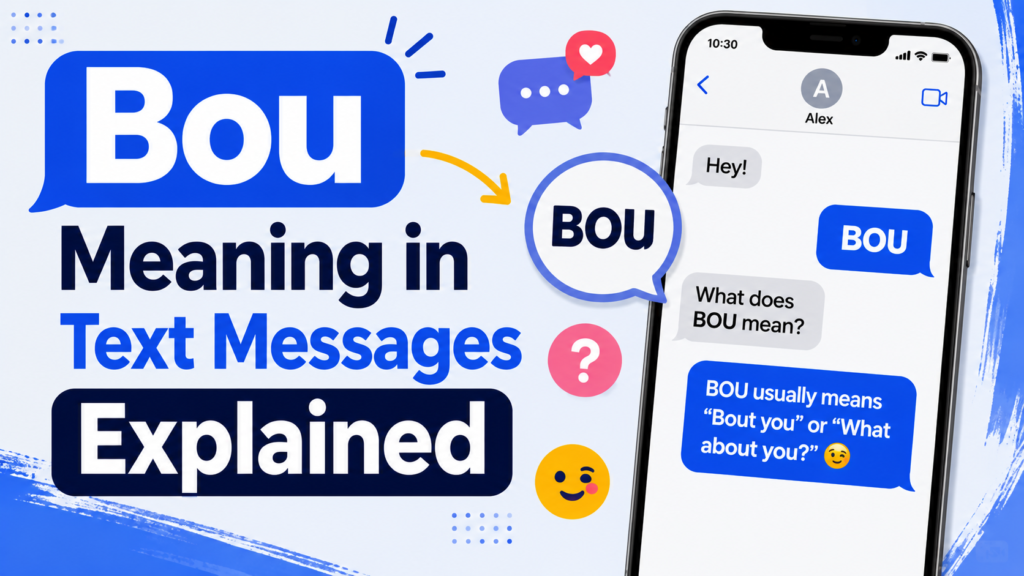
If you’ve seen Bou Meaning in Text Messages while texting or scrolling through social media, you might wonder what it really means. Many people ask about Bou Meaning in Text Messages because this modern slang keeps appearing in chats, captions, and comments. The word bou is a cute and friendly nickname that often shows affection. Just like people search for what does sa mean, sa meaning, or WYW meaning in text, they also want a clear answer about this popular expression.
Learning BOU Meaning in Text Messages is easier than you might think. The term usually has a warm and caring tone. Friends, couples, and even close family members may use it in casual conversations. As online language keeps changing, new words spread quickly. That’s why many people also search for how and other texting terms to stay updated with modern communication.
This guide explains Bou Meaning in Text Messages in simple English. You’ll learn where the word came from, how people use it, and when it fits naturally in a conversation. Real examples will help you understand the meaning with confidence. By the end, Bou Meaning will feel familiar and easy to use in everyday texting.
“BOU” – Quick Meaning
BOU is an affectionate nickname that people use in text messages and online conversations. It usually refers to someone they love or care about. If you’re wondering about BOU Meaning in Text Messages the answer is simple. It is a cute way to address a special person.
The word is very similar to Boo, Babe, and Bae. In most cases, it carries the same meaning. Many people use it to show affection, warmth, and emotional closeness during texting or casual messaging.
Simple definition:
👉 Bou is a sweet and intimate nickname for someone who is important to you.
Examples:
- “Goodnight, BOU. ❤️”
- “I miss you, bou.”
- “How was your day, bou?”
- “You’re my bou.”
In today’s digital communication, Bou Meaning is generally considered a playful spelling variation of Boo. The meaning stays the same. Only the spelling changes to make it look more modern and personal.
Origin & Background
The story behind Bou Meaning in Text Messages comes from the way internet language continues to evolve. New words often become popular through social media, modern texting, and creative digital writing.
1. From “Boo” to “Bou”
The word Boo has been used for many years as an affectionate nickname. It became popular through African American Vernacular English (AAVE) before spreading into everyday text slang. As people looked for more creative ways to write familiar words, Bou appeared as a stylish alternative.
2. Social Media Influence
Apps like TikTok, Instagram, and WhatsApp helped make Bou more visible. People started using it in captions, comments, Instagram DMs, and usernames because it looked unique and matched current social media trends.
3. Pronunciation and Creative Spelling
In some places, the way people pronounce Boo sounds closer to Bou. This accent influence, along with creative spelling, helped the word spread across different online communities. It became another example of how language evolution shapes online slang.
4. A Personal Touch
Many people enjoy making common words feel more personal. Changing one letter turns Boo into BOU without changing its meaning. It reflects personalized communication and gives the nickname a fresh look.
Today, BOU Meaning is less about a new definition and more about expressing love, friendship, warmth, and emotional connection in a simple and modern way.
Emotional & Psychological Meaning
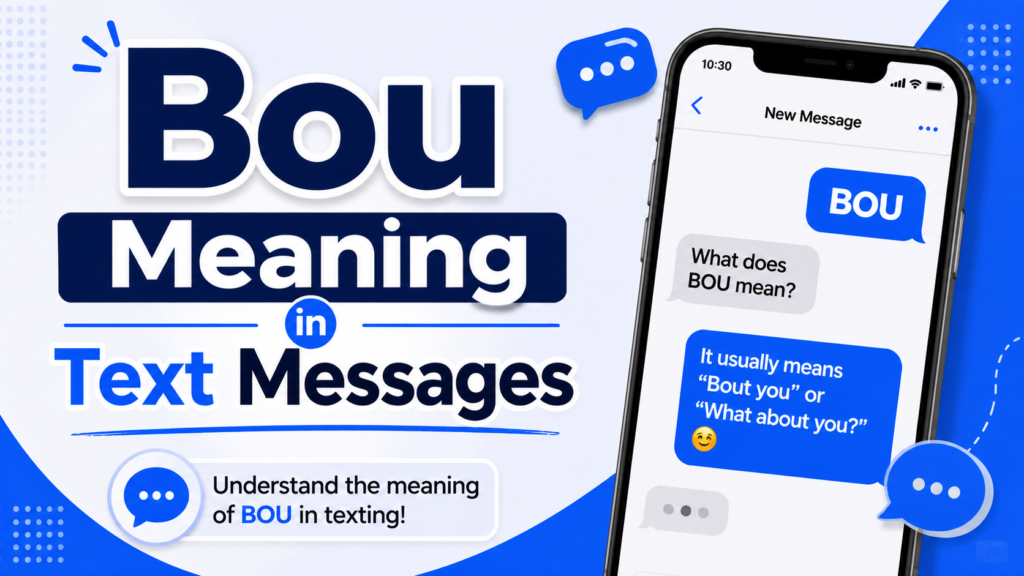
Bou Meaning in Text Messages goes beyond a simple nickname. When someone calls you BOU, they usually want to express affection, emotional closeness, and a strong sense of human connection. The word feels warm, gentle, and personal. That is why it has become popular in modern texting and digital communication.
People often use bou to show:
- Comfort
- Caring
- Fondness
- Emotional intimacy
- Romantic affection
- Playful love
Unlike formal relationship labels such as partner, boyfriend, or girlfriend, BOU sounds softer and more natural. It creates a feeling of emotional safety without putting pressure on the relationship. In many cases, it works as a cute nickname or term of endearment between couples, close friends, or someone you deeply care about.
Why Do People Use “Bou”?
Today’s internet language focuses on quick and meaningful emotional expression. A single word like bou can communicate warmth without a long message. It helps people feel connected during everyday text messages, chat, and online conversations.
What Does It Say About Modern Communication?
The growing use of Bou Meaning in Text Messages reflects changing communication trends. People prefer personalized communication and informal language that feels genuine. Instead of using formal titles, they choose affectionate words that build familiarity and strengthen social bonding.
Real-Life Example
Imagine you’re dating someone and they text, “Sleep well, BOU. ❤️” The message feels more caring than a simple “Goodnight.” The word BOU adds warmth and shows emotional importance. It reminds you that you matter to the other person.
That is the real meaning behind Bou Meaning. It is not just a trendy piece of online slang. It is a small word that carries big feelings and helps people express love, comfort, and closeness in everyday communication.
Usage in Different Contexts
Bou Meaning in Text Messages can change slightly depending on where and how people use it. In most situations, bou remains an affectionate nickname that expresses warmth, caring, and emotional closeness. However, the tone and context make a big difference.
Social Media
You’ll often see BOU on TikTok, Instagram, WhatsApp Status, and other social media platforms. People use it in captions, comments, Instagram DMs, and even usernames to show love or appreciation.
Example:
“Weekend with my BOU. ❤️”
Tone: Romantic, playful, and affectionate.
Friends & Relationships
Although BOU is mostly linked to romantic relationships, some close friends also use it as a cute nickname. It works best when both people are comfortable with informal language.
Example:
“You okay, bou?”
Tone: Caring, friendly, and personal.
Work / Professional Settings
Avoid using bou in professional communication, professional emails, or workplace communication. The word sounds too personal and may create a tone mismatch in formal conversations.
Example to avoid:
“Thanks for your help, bou.”
Use professional greetings instead when talking to coworkers, clients, or managers.
Casual vs Serious Tone
One reason Bou Meaning in Text is so popular is that it fits different emotions.
Casual:
“Hey, BOU! What’s up?” 😂
Serious:
“I’m always here for you, bou.” ❤️
The same word can sound playful in one message and deeply supportive in another. Everything depends on the relationship context, the conversation, and the feelings you want to express.
Real-Life Conversations
The best way to understand Bou Meaning in Text Messages is to see how people actually use it. In most text messages, online chat, and social media conversations, Bou appears as a warm and affectionate nickname. It adds a personal touch and makes the conversation feel more friendly and caring.
Person A: Did you get home safely?
Person B: Yes, BOU. I just got home. ❤️
Instagram DMs
Person A: You looked amazing today. 😍
Person B: Thanks, BOU. That means a lot. ❤️
TikTok Comments
Person A: You two are such a cute couple.
Person B: That’s my bou. 😊
Text Messages
Person A: I already miss you.
Person B: I’ll see you tomorrow, BOU.
These examples show that Bou Meaning in Text usually stays the same across different platforms. Whether someone uses it on WhatsApp, Instagram, TikTok, or in everyday messaging, the word expresses affection, warmth, and emotional closeness. The exact meaning depends on the relationship context, but it almost always sounds friendly, caring, and personal.
When NOT to Use It
Even though BOU Meaning in Text Messages is friendly and harmless, it doesn’t fit every situation. Because BOU is an affectionate nickname, using it in the wrong place can sound awkward or unprofessional. Always think about the context, the relationship, and the tone before using it.
Avoid using bou in these situations:
- Professional emails
- Workplace communication
- Formal communication
- Messages to strangers
- Early stages of dating when you don’t know the person well
- Serious arguments or sensitive discussions
- Situations where cultural differences require formal language
Example:
❌ “Dear Manager, thank you, bou.”
This creates a clear tone mismatch because the message is formal while the nickname is very personal.
Instead, save bou for text messages, casual messaging, and online conversations with someone you know well. It works best between close friends, couples, or people who already share emotional closeness. Using it in the right relationship context makes your message feel warm, caring, and natural.
Common Misunderstandings
Many people misunderstand BOU Meaning in Text, especially if they see the word for the first time. Since bou is part of modern internet slang, its meaning can seem unclear without the right context. Here are the most common misconceptions.
1. People Think It Has a Different Meaning Than “Boo”
This is the biggest misunderstanding. In most text messages, Bou has the same meaning as Boo. It is simply a spelling variation with a more modern and stylish look.
2. Everyone Assumes It’s Romantic
Not always. While bou is common between couples, some close friends also use it as an affectionate nickname. The meaning depends on the relationship and the conversation.
3. People Believe It’s a Typo
Many assume someone accidentally misspelled Boo. In reality, BOU is usually written on purpose as part of today’s online slang and digital communication.
4. The Tone Can Be Misread
Without emojis or extra context, it can be difficult to tell whether BOU sounds flirty, friendly, or simply caring. Reading the whole conversation helps you understand the intended tone.
5. Not Everyone Knows the Word
Because BOU Meaning in Text is still growing in popularity, some people have never seen it before. This is especially true among older generations or those who don’t spend much time on social media.
Understanding these common misunderstandings makes it easier to use bou correctly. In most cases, it is simply a warm and personal nickname that expresses affection and emotional closeness.
Comparison Table
The table below makes Bou Meaning in Text Messages easier to understand by comparing bou with other popular text slang and affectionate nicknames. While these words all express care or affection, each one has its own tone and common usage.
| Expression | Meaning | Tone | Relationship Level |
| Bou | Affectionate nickname | Soft and personal | Close relationship |
| Boo | Romantic nickname | Warm and loving | Romantic or very close |
| Bae | Partner or crush | Trendy and modern | Romantic |
| Babe | Classic term of endearment | Intimate | Romantic |
| Bro | Friend | Casual | Platonic friendship |
| Love | Caring nickname | Emotional and warm | Close relationship |
| Hun | Friendly nickname | Gentle and kind | Friends, family, or partner |
Key Takeaway:
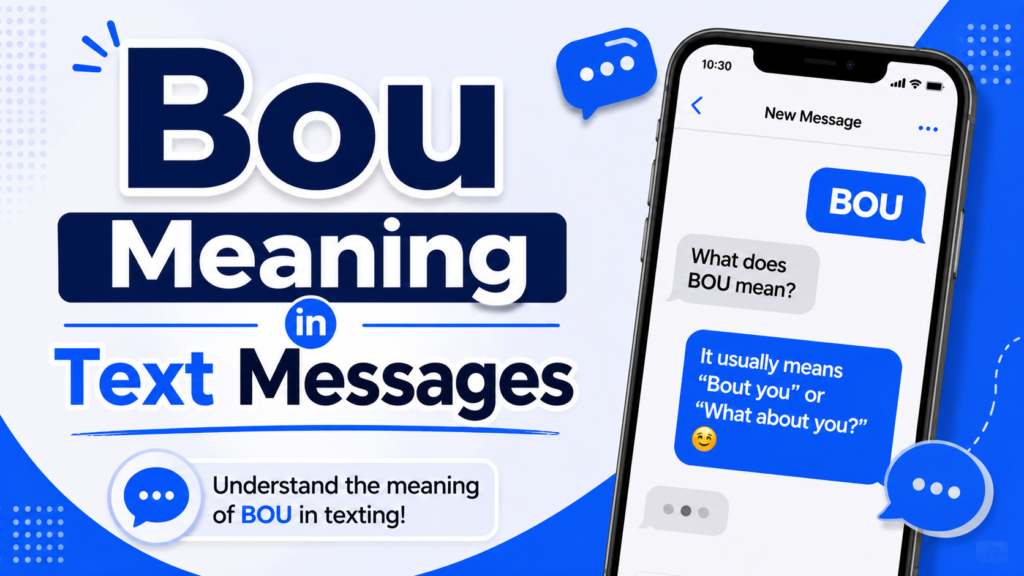
Bou Meaning in Text is closest to Boo, but it feels more modern because of its unique spelling. Whether someone says my bou, bou ❤️, or simply bou, the message usually expresses affection, emotional closeness, and a personal connection.
Variations / Types
1. Boo – Original affectionate term
2. Bouu – Extra cute emphasis
3. BOU ❤️ – Romantic tone
4. My BOU – Possessive affection
5. Lil BOU – Playful nickname
6. Hey BOU– Casual greeting used in everyday texting.
7. Bou Bae – Double affectionate slang for someone special.
8. Bouboo – Extra sweet and playful nickname for a loved one.
9. Baby BOU– Romantic variation that adds more warmth and affection.
10. BOU Bear – Cute pet name often used between couples.
All of these variations share the same emotional meaning. They express affection, warmth, and emotional closeness. While the spelling may change, Bou Meaning in Text remains the same. Each version simply gives the nickname a unique and personal touch.
How to Respond When Someone Uses It
If someone calls you BOU , your reply should match the tone of the conversation and your relationship with that person. Since Bou Meaning in Text usually expresses affection, warmth, or emotional closeness, your response can be friendly, playful, romantic, or respectful. Here are some simple ideas.
Casual Replies
- “Hey! 😊”
- “Hi, bou!”
- “What’s up?”
- “How’s your day going?”
- “Good to hear from you!”
Funny Replies
- “Yes, bou. 😎”
- “Missed me already?”
- “Only my bou gets that reply. 😂”
- “You’re making me smile.”
- “Always thinking about me, huh?”
Mature Replies
- “I appreciate you.”
- “You’re so thoughtful.”
- “I’m glad to hear from you.”
- “That means a lot to me.”
- “Thank you for checking in.”
Respectful Replies
- “Thank you.”
- “That’s very kind of you.”
- “I really appreciate your message.”
- “You’re so sweet.”
- “Wishing you a wonderful day too.”
The best response depends on the relationship context and the conversation. Whether you’re chatting with a close friend, your partner, or someone you’re dating, a genuine reply always feels the most natural.
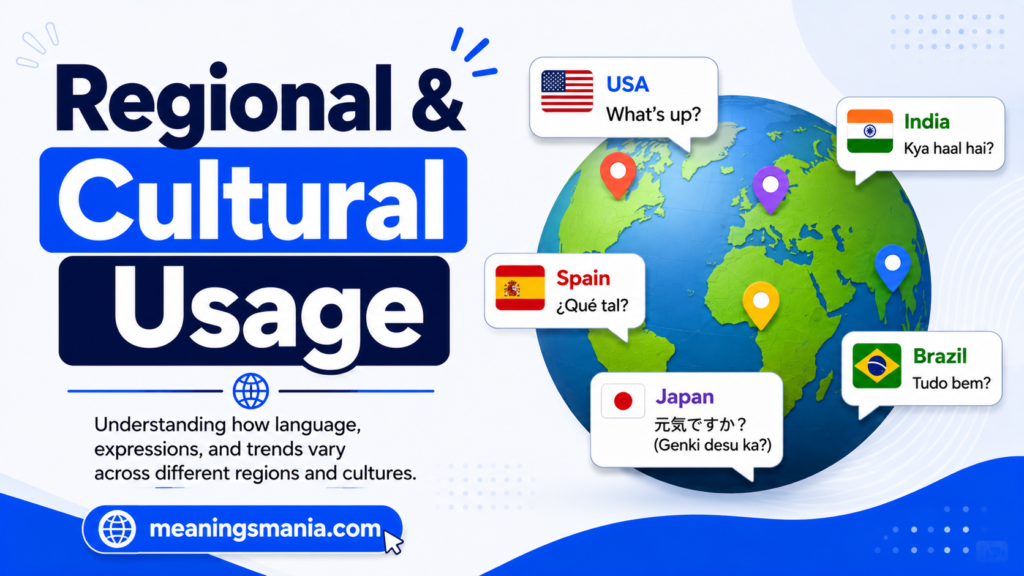
Regional & Cultural Usage
Bou Meaning in Text Messages can vary slightly across different cultures and regions. While the word usually carries the same affectionate meaning, people may use it differently depending on local language, customs, and communication styles.
Western Culture
In many Western countries, BOU is common in modern texting, social media, and dating conversations. It is seen as a cute, informal nickname similar to Boo, Babe, or Bae. You’ll often find it in TikTok captions, Instagram comments, and everyday text messages.
Asian Culture
The word is less common in Asia, but many English-speaking communities recognize it through TikTok, Instagram, and other social media platforms. Younger users, especially Gen Z, are more likely to adopt modern internet slang like bou.
Middle Eastern Culture
Usage differs across the Middle East. In more conservative communities, affectionate nicknames are usually reserved for family members, married couples, or close relationships. Using BOU with someone you don’t know well may feel inappropriate.
Global Internet Usage
Thanks to global internet culture, bou has spread beyond one region. Today, you can see it in:
- TikTok captions
- Instagram comments
- WhatsApp chats
- Couple content
- Gaming chats
- Online conversations
Generational Differences
Gen Z: Uses BOU naturally as part of modern online slang and digital communication.
Millennials: Most understand BOU , although many still prefer Boo or Babe.
Older Generations: Some may not recognize the term because it is a newer part of internet language and social media culture.
Although usage changes from one place to another, Bou Meaning in Text remains the same. It is a warm and affectionate nickname that expresses closeness, caring, and emotional connection.
Is It Safe for Kids?
Yes. Bou Meaning in Text Messages is generally safe for kids. Bou is simply a cute and affectionate nickname with no harmful meaning.
However, context always matters. If the word appears in romantic or private conversations, parents should pay attention to the relationship instead of the word itself. Overall, Bou Meaning in Text is considered safe slang, and it is the conversation—not the nickname—that determines whether its use is appropriate.
FAQ’s
Does bou mean boyfriend or girlfriend?
No. Bou Meaning in Text Messages refers to an affectionate nickname. It does not automatically mean boyfriend or girlfriend.
Is bou the same as boo?
Yes. Bou Meaning in Text is almost identical to boo. The difference is mainly the modern spelling.
Can friends use bou?
Yes. Bou Meaning in Text Messages also fits close friendships. It is not limited to romantic relationships.
Does calling someone BOU mean flirting?
Not always. Bou Meaning in Text depends on the conversation. It can sound friendly, caring, or romantic.
Can I use bou at work?
No. Bou Meaning in Text Messages is too personal for professional communication. It works better in casual conversations.
Why do people spell it BOU?
People like unique spellings. Bou Meaning in Text reflects modern texting and creative online communication.
Is bou a typo?
Usually not. Bou Meaning in Text Messages is an intentional spelling variation that has become popular on social media.
Conclusion
Understanding Bou Meaning in Text Messages is now much easier. Bou is a simple and affectionate nickname that shows care, warmth, and emotional closeness. You will often see it in text messages, social media, and everyday chats. Just like people search for what does sa mean, sa meaning, or WYW meaning in text, many also want a clear explanation of Bou Meaning in Text because new slang appears every day.
The meaning usually stays the same across different platforms. Bou Meaning in Text Messages often reflects love, friendship, or playful affection. Context always matters, so pay attention to the conversation before using it. If you have searched for how or other texting terms, learning this word will help you understand modern online language even better.
As digital communication continues to grow, Bou Meaning in Text Messages will likely remain a popular expression. Whether you use BOU with a partner or a close friend, it adds a personal touch to your message. Now you can recognize it, understand it, and use it naturally with confidence.