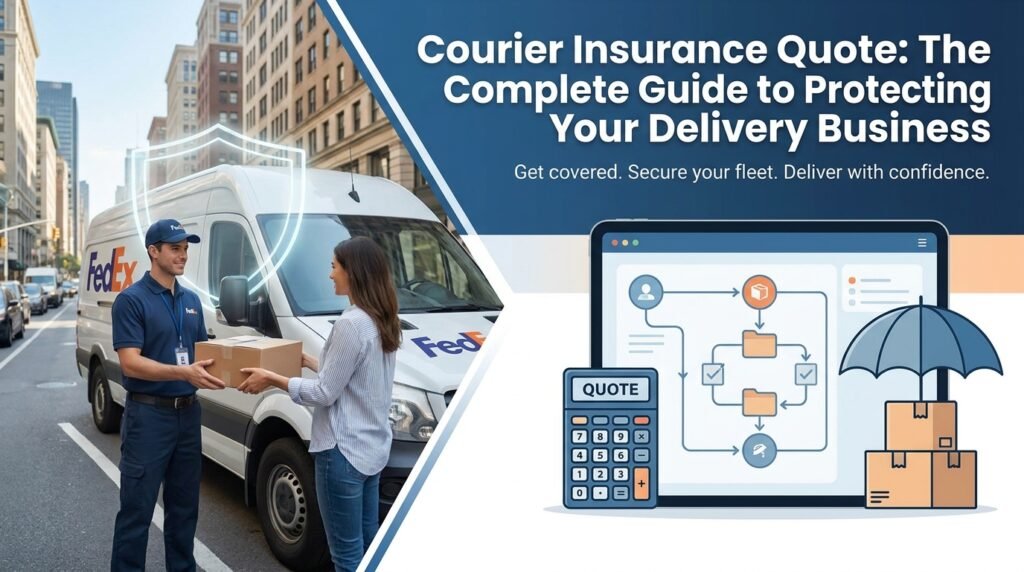
Picture this: you’re three stops into your route, and someone’s package slides off the seat during a hard stop. Now what? This is exactly why courier insurance exists.
Getting a solid courier insurance quote isn’t just paperwork. It’s real protection for your income, your vehicle, and your reputation with clients. Whether you drive a compact car or a full-size cargo van, insurance for courier work covers risks that regular auto policies simply won’t touch.
This guide breaks it all down. We’ll cover courier service insurance options, what courier business insurance actually includes, and how courier truck insurance differs for bigger vehicles. No jargon, no fluff. Just clear answers so you can pick coverage that fits your business and drive with real peace of mind.
What Is Courier Insurance and Why Does It Matter?
Courier insurance protects you while you’re transporting goods on behalf of a business or a customer. Think about it this way: the moment you pick up someone’s package, you become responsible for it. If it gets damaged, stolen, or lost before it reaches its destination, standard auto insurance usually won’t cover that. That’s the gap courier insurance is built to close.
This matters more than people realise until something goes wrong. Say you’re doing multi-drop deliveries for a local bakery and a box of custom-order pastries slides off the seat and gets ruined in a hard brake. Without the right policy, you’re paying out of pocket — or losing the client. With it, you’ve got a safety net that covers your business, not just your car.
Courier Insurance Coverage Explained
Most courier insurance quotes break down into three main levels, and picking the right one depends on how much risk you’re comfortable carrying.
- Third Party Only (TPO): The legal minimum. It covers harm or injury you cause to someone else, but nothing on your end.
- Third Party, Fire & Theft (TPFT): A step up. You get third-party protection plus coverage if your vehicle is stolen or damaged by fire.
- Comprehensive courier insurance: The full package. It covers third-party liability, fire, theft, and harm to your own car — regardless of whether the accident is your responsibility.
For many self-employed couriers, comprehensive cover ends up being worth the extra cost. If your van is your only source of income, you really don’t want a fender bender taking you off the road for weeks while you scramble to cover repairs.
How We Help You Pick the Best Courier Insurance Policy
Picking a policy isn’t a one-size-fits-all decision, and honestly, that’s where a lot of drivers get stuck. A good insurance broker will look at how you actually operate — solo driver or small fleet, local drops or long-haul runs — before recommending anything.
A few things worth sorting out early:
- Registration name: Are you insuring the policy under your own name or your company’s? This affects your liability and how claims get processed.
- No claims bonus: Some policies let you protect this bonus even after a claim; others don’t. It’s worth asking directly rather than assuming.
- Fleet size: Running one van is very different from running five. Once you cross that threshold, fleet insurance usually becomes the smarter, cheaper route.
Getting this right upfront saves you from re-shopping your policy every renewal cycle.
Additional Protection for Your Courier Company
Base-level courier insurance covers the essentials, but certain situations call for extra layers. If you’re delivering in a dense city centre or an area with higher crime rates, it’s worth building in more protection rather than hoping for the best.
Here’s what typically rounds out a stronger policy:
- Goods in transit cover — protects the actual items you’re delivering, not just your vehicle.
- Public liability insurance — secures you if someone gets injured or if their property is damaged or harmed due to your work.
- Breakdown cover — because a flat tyre shouldn’t mean a missed delivery window and an angry client.
- Excess protection — softens the financial hit if you do end up filing a claim.
- Employers’ liability — required if you’ve got anyone working for you, even part-time.
None of these is a flashy add-on. They’re the difference between a minor hiccup and a genuinely expensive week.
Our Tips on Maintaining Courier Insurance
Buying the policy is step one. Keeping it working in your favour is a separate skill, and it pays off over time.
- Report accidents immediately, even small ones — delays tend to complicate claims and can raise costs.
- Don’t miss premium payments; lapses can hurt your credit and your renewal rates.
- Ask about a free replacement vehicle clause so a breakdown doesn’t stop your income.
- Stay honest about your driving record and claims history. Insurers do check, and a discovered inconsistency can void your entire policy.
A little discipline here goes a long way toward keeping your premiums manageable year after year.
How Much Does Courier Insurance Cost in 2026?
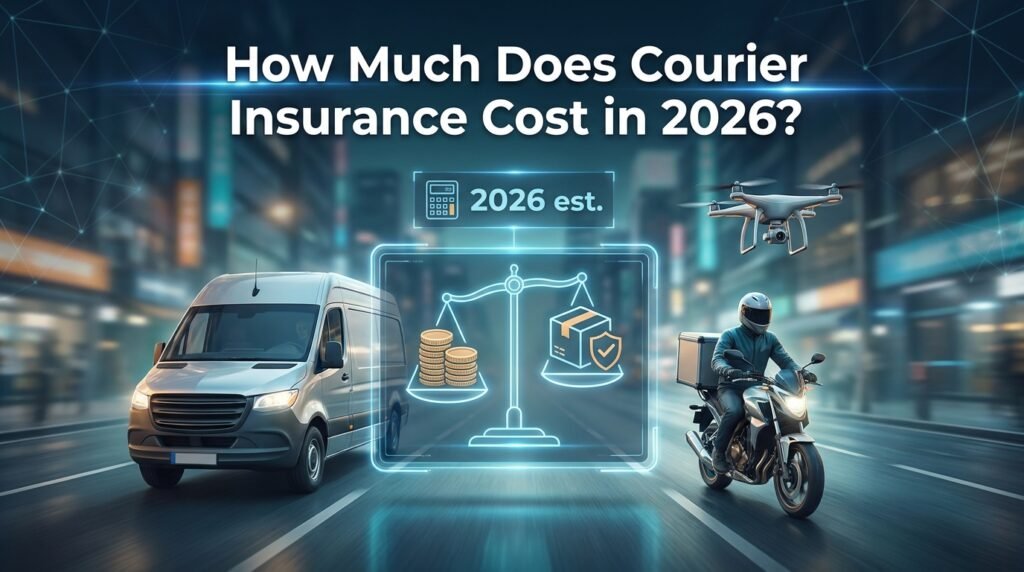
There’s no single number that applies to everyone, and any site that tells you otherwise is oversimplifying. Your courier insurance quote depends on your vehicle type, how many miles you drive, your delivery radius, your claims history, and even where you’re based.
That said, here’s a rough shape of what affects your price:
- Vehicle type: A cargo van costs more to insure than a compact car.
- Coverage level: Comprehensive plans cost more upfront but save you money if something happens.
- Driving record: Clean records unlock lower premiums fast.
- Delivery volume: High-frequency, multi-drop routes usually mean higher risk, which nudges rates up.
If you’re just starting, getting a courier insurance quote comparison from a few providers is honestly the fastest way to understand where you actually stand, rather than guessing based on someone else’s premium.
Courier Insurance vs General Business Insurance: What’s the Difference?
This trips up a lot of new couriers. General business insurance covers things like your office, equipment, or general liability tied to running a company. It’s broad by design. Courier insurance, on the other hand, is built specifically around the risks of driving and delivering goods.
Here’s the simplest way to think about it: if you’re transporting packages, driving is central to your operation, and general business coverage seldom accounts for that properly. A standard business policy might cover a stolen laptop in your office. It won’t cover a stolen shipment sitting in your van outside a client’s building. That’s exactly the gap courier-specific policies are designed to close.
Common Mistakes Courier Drivers Make When Buying Insurance
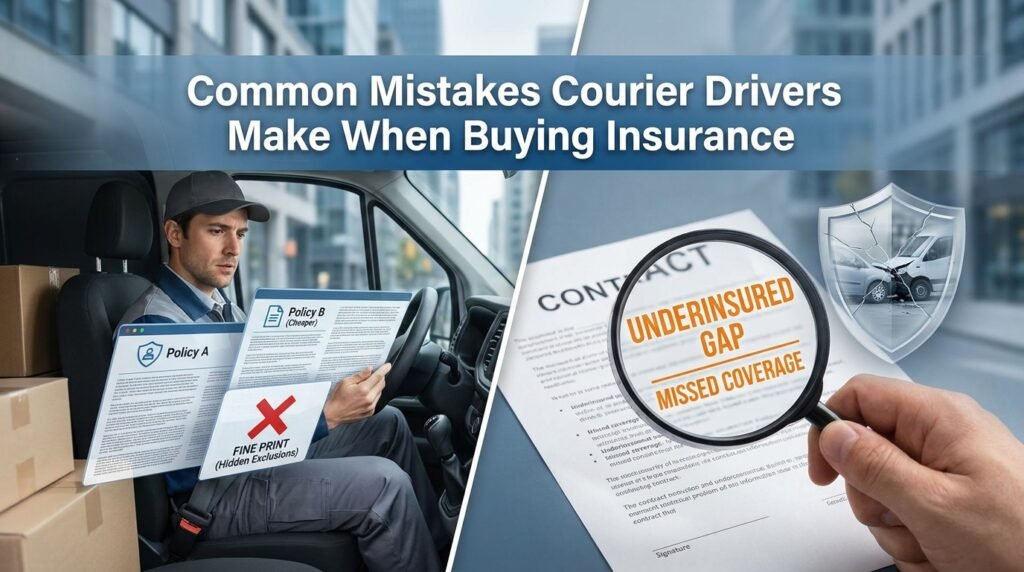
Even experienced drivers make avoidable mistakes when they’re picking a policy. Most of these come down to assuming coverage instead of confirming it.
Do You Need Goods in Transit Cover as a Self-Employed Courier?
Short answer: probably, yes. If you’re self-employed and handling other people’s goods, standard auto insurance typically won’t reimburse you for damaged or stolen cargo. Goods in transit cover fills that exact gap, and for most independent couriers, it’s non-negotiable, not optional.
What Happens If You Get Into an Accident Without the Right Policy?
This is where things get expensive fast. Without proper courier insurance, you could be personally liable for damaged goods, injury claims, and vehicle repairs — all at once. Worse, driving commercially on a personal auto policy can sometimes void your coverage entirely, leaving you exposed with nothing to fall back on.
How to Compare Courier Insurance Quotes Without Getting Overwhelmed
Don’t just chase the cheapest number. Compare what’s actually included — goods in transit limits, excess amounts, breakdown cover, and whether a replacement vehicle is part of the deal. A slightly higher premium with stronger coverage usually beats a cheap policy full of gaps you won’t notice until you need it.
Frequently Asked Questions
What does a courier insurance quote typically include?
A standard courier insurance quote usually covers third-party liability, and depending on the level you choose, it can include fire, theft, vehicle damage, and goods-in-transit protection tailored to your delivery work.
Is courier insurance more expensive than regular van insurance?
Yes, generally. Courier insurance factors in commercial use, higher mileage, and cargo risk, so it typically costs more than standard van insurance, which doesn’t account for delivering goods professionally.
Can I get a courier insurance quote as a part-time or new driver?
Yes, most insurers offer courier insurance quotes for new drivers, though premiums may run higher initially. Building a clean driving record over time usually brings your rates down significantly.
Do I need goods in transit cover if I only make local deliveries?
Yes, distance doesn’t matter much here. Even short local drops carry risk of damage, theft, or loss, so goods in transit cover is just as important for local couriers as it is for long-haul drivers.
What’s the difference between TPO and comprehensive courier insurance?
TPO covers only damage or injury you cause to others, while comprehensive courier insurance covers that plus your own vehicle and goods, offering far broader protection for a higher premium.
How can I lower my courier insurance quote over time?
Keep a clear driving history and promptly report any accidents, avoid missed payments, and protect your no claims bonus. These habits gradually reduce your premiums and improve your standing with insurers.
Does courier insurance cover employees driving my delivery van?
Only if your policy includes employer’s liability and named-driver coverage, and if you’ve got staff or contractors driving your vehicles, you’ll need to confirm they’re explicitly listed on your courier insurance policy.
Conclusion
At the end of the day, courier insurance isn’t optional if you’re serious about this business. It protects your income, your vehicle, and your reputation with clients who trust you with their goods. One bad day without coverage can undo months of hard work.
Getting a courier insurance quote doesn’t have to feel overwhelming. Compare a few providers, ask direct questions, and pick coverage that actually matches how you work. Whether you’re running a single van or managing a small fleet, the right courier service insurance keeps you protected without draining your budget.
Think of insurance for courier work as part of your toolkit, right alongside your GPS and your delivery app. Courier business insurance and courier truck insurance exist for exactly this reason: to keep small mishaps from becoming big problems. Get it sorted now, drive with confidence, and let your business keep moving forward.
Courier Insurance Quote Courier Insurance Quote Courier Insurance Quote Courier Insurance Quote Courier Insurance Quote Courier Insurance Quote Courier Insurance Quote Courier Insurance Quote Courier Insurance Quote