If you search for Edge Meaning Slang, you’ll find that this phrase changes with context and online trends. Edge Mean Slang can describe a vibe, attitude, or feeling in modern chats. People use Edge Meaning Slang across social media, texting, and digital conversations to show different emotions.
This guide explains Edge Meaning Slang in simple words and answers questions like what does type shi mean and how slang evolves today. You may also see trends like my roman empire meaning when people share personal thoughts online. These expressions show how language keeps changing.
From fun comparisons like similes for chocolate to cheerful phrases using similes for happiness, slang adds color to everyday speech. Edge Meaning Slang helps explain modern youth language and online culture. Whether you use it in chats or posts, understanding Edge Mean Slang makes communication easier today.
What Does “Edge” Mean in Slang? (Updated 2026 Meaning)
In 2026, Edge Meaning Slang has become a common phrase in online conversations, gaming spaces, and social media platforms. The meaning of “edge” changes depending on the situation, tone, and the person using it.
In modern slang, “edge” can describe confidence, strong emotions, a unique personality, or a bold attitude. Gen Z and Gen Alpha often use it to describe someone with an edgy vibe or a different style that stands out.
The edge slang definition is not fixed. It can show excitement, tension, confidence, or even a feeling of being slightly nervous.
Core Meanings of “Edge” in Slang:
Emotional intensity
Example: “That final scene left me on edge.”
Bold personality
Example: “He has an edge that makes him different.”
Competitive advantage
Example: “This skill gives players an edge.”
Excitement or anticipation
Example: “I’m on edge waiting for the announcement.”
Today, the word “edge” has moved beyond its traditional meaning. It has become part of modern internet slang, digital conversations, and online expressions.
“Edge” Meaning in Texting and Social Media
In texting and social media, edge meaning in texting usually focuses on emotions and reactions. People use it because it is short, expressive, and easy to understand in fast conversations.
The edge meaning in chat can change based on the message tone. Someone might use it to describe excitement, stress, suspense, or a person’s unique personality.
Common Texting Uses:
“Bro, I’m on edge rn 😭”
Meaning: Feeling nervous or excited.
“This game has me on edge!”
Meaning: The experience feels intense.
“Your style has an edge.”
Meaning: Your personality or look feels unique.
On platforms like TikTok and Instagram, edge meaning on social media often connects with trends, memes, and youth expressions. It shows how modern internet slang keeps evolving with digital culture.
Different Contexts of “Edge” (Tone-Based Meaning)
Understanding the Edge Meaning Slang depends on the tone and situation where people use it. The same word can create a different impression in casual chats, emotional moments, or professional conversations.
In modern communication, edge meaning slang is often context-based meaning. People don’t always use it with one fixed definition. Instead, they use it to express feelings, personality, style, or attitude.
The tone behind the word helps you understand what someone really means.
1. Casual Tone
In casual conversations, “edge” usually describes excitement, uniqueness, or something that feels different.
Friends may use it while talking about games, movies, fashion, or online trends.
Examples:
- “That match had me on edge!”
- “Your style has a cool edge.”
Here, “edge” creates a feeling of energy or something memorable. It is common in online chats, social media slang, and everyday conversations.
2. Emotional Tone
When someone says they are “on edge,” it usually describes strong feelings like anxiety, nervousness, or anticipation.
Examples:
- “I’ve been on edge waiting for the results.”
- “That message put me on edge.”
In this situation, the phrase shows emotional intensity. It explains a moment when someone feels tense, worried, or highly focused.
3. Confident or Bold Tone
Sometimes, “edge” describes a person’s attitude, personality, or appearance. It can represent a bold personality, fearless personality, or rebellious style.
Examples:
- “She has an edgy vibe that makes her stand out.”
- “His fashion has a unique edge.”
This use of “edge” connects with personal identity, cool attitude, and a distinctive factor that makes someone different from others.
4. Professional or Polished Tone (Adapted Use)
Although “edge” is popular in informal language, it can also appear in professional settings with a different meaning.
In workplace language, “edge” often means an advantage, strength, or special quality.
Examples:
- “This strategy gives the company a competitive edge.”
- “Her experience provides a strategic advantage.”
In formal communication, LinkedIn communication, and business discussions, people usually use “edge” in a more polished way instead of casual slang.
The meaning always depends on the audience, platform, and conversation tone. That’s why understanding slang usage and social context helps you choose the right language.
Full Form & Meaning of IKYFL in Modern Slang
Another popular expression connected with modern internet slang is IKYFL. This abbreviation appears often in texting, social media comments, and online conversations when people want to show a strong reaction.
IKYFL = I Know You’re F*ing Lying
The IKYFL meaning stands for “I Know You’re F*ing Lying.” People use this phrase when they feel shocked, surprised, or doubtful about something someone says.
In most cases, IKYFL slang is not meant to sound aggressive. Among Gen Z and Gen Alpha users, it often works as a playful reaction, humor slang, or disbelief expression.
People usually use IKYFL to show:
- Shock
- Disbelief
- Sarcasm
- Funny reactions
- Strong emotions
Examples:
- “IKYFL you finished that whole project in one day 😭”
- “IKYFL… that actually happened?”
- “IKYFL if you think I’m believing that story 😂”
In digital conversations, IKYFL has become part of modern texting phrases and online expressions. Like other trending slang words, its meaning depends on the relationship between people and the tone of the conversation.
Just like Edge Mean Slang, IKYFL shows how language keeps changing through social media trends, internet culture, and fast-paced chats. These short expressions help people share emotions quickly without writing long explanations.
Polite, Professional, and Casual Alternatives to “Edge”
Sometimes, using Edge Meaning Slang directly may not fit every situation. The right word depends on your audience, platform, and conversation tone.
In casual communication, slang can make conversations feel natural and expressive. However, workplace language, emails, or formal communication usually need clearer and more professional vocabulary.
Here are some useful alternatives based on different situations:
Polite Alternatives:
When you want to sound friendly and respectful, you can replace “edge” with words that show uniqueness or emotion.
Examples:
- “It adds a unique quality.”
- “It brings something special.”
- “It creates a strong impression.”
- “It adds emotional depth.”
These options work well when you want to explain a person, idea, or style without using informal language.
Professional Alternatives:
In business or formal settings, “edge” often means an advantage or strength.
Examples:
- Competitive advantage
- Strategic advantage
- Distinctive factor
- Strategic strength
For example:
Instead of saying:
“Your idea has a great edge.”
You can say:
“Your idea provides a competitive advantage.”
This type of language works better in professional vocabulary, LinkedIn communication, and workplace discussions.
Casual Alternatives:
In everyday chats and social media, people often use more expressive phrases instead of “edge.”
Examples:
- “That hits different.”
- “That’s wild.”
- “That’s intense.”
- “This feels different.”
- “That’s the whole vibe.”
These phrases are common in Gen Z expressions, Gen Alpha expressions, and online slang culture.
Choosing the right alternative depends on language choice, audience awareness, and social context. A word that works perfectly in a group chat may not sound right in an email or professional conversation. Understanding the situation helps you communicate naturally.
How to Choose the Right Alternative (2026 Communication Strategy)
Choosing the right word is more important than simply knowing the meaning of a slang term. In 2026, communication happens across many spaces, including social media, gaming conversations, workplace chats, and personal messages.
The best choice depends on who you are talking to, where you are writing, and what feeling you want to share. Good communication is not only about words. It is about understanding the situation and matching the right tone.
Here are three important factors to consider:
1. Audience
Your audience decides whether slang feels natural or out of place.
Examples:
- Friends: Casual slang like “edge” can feel fun and relatable.
- Online communities: Modern phrases and trending expressions are common.
- Workplace: Professional vocabulary creates a better impression.
Knowing your audience helps you avoid slang mistakes and improves conversation awareness.
2. Platform
Different platforms have different communication styles.
Examples:
- TikTok and Instagram: Social media slang, emojis, and short-form communication are popular.
- Gaming chats: Gaming slang and quick reactions are common.
- Emails and LinkedIn: Formal language and professional alternatives work better.
A phrase that fits a fast-paced chat may not fit a business message.
3. Intent
Your purpose also changes the best language choice.
If you want to show humor or excitement, expressive words and casual slang can work well.
Example:
“Not gonna lie, that was amazing.”
If you want to sound serious or professional, choose clearer words.
Example:
“This gives us a strategic advantage.”
Understanding intent helps you create better digital conversations. Whether you use slang, formal language, or modern vocabulary, the goal is simple: make your message clear and meaningful.
10 Best Examples of “Edge” in Real Conversations (2026 Style)
The best way to understand Edge Meaning Slang is by seeing how people use it in real conversations. In 2026, the word “edge” appears in texting, social media posts, gaming chats, and everyday discussions.
Because edge mean slang changes with context, each example can show a different feeling. It might describe excitement, tension, confidence, or a unique personality.
Here are 10 examples of “edge” used in modern conversations:
- “That movie ending had me on edge the whole time 😳”
Meaning: The movie created suspense, excitement, or tension. - “I’m on edge RN waiting for the final results.”
Meaning: The person feels nervous and full of anticipation. - “Your style has a different edge. It really stands out.”
Meaning: The person has a unique style or bold personality. - “That gaming match was intense. Everyone was on edge.”
Meaning: Players felt strong emotions during the competition. - “Her confidence gives her an edge over others.”
Meaning: She has a competitive advantage. - “Not gonna lie, this new design has an edgy vibe.”
Meaning: The design feels modern, bold, or slightly rebellious. - “That plot twist gave the story a darker edge.”
Meaning: The story gained a more intense feeling. - “Your idea gives the team a strategic edge.”
Meaning: The idea creates a useful advantage. - “I was on edge before sending that message.”
Meaning: The person felt anxious or unsure. - “That performance had an emotional edge that people loved.”
Meaning: The performance created a powerful emotional reaction.
These examples show how flexible the word “edge” has become in modern communication. From online expressions to professional conversations, its meaning depends on tone, situation, and the emotions behind the message. Understanding these differences helps you use slang naturally and avoid confusion.
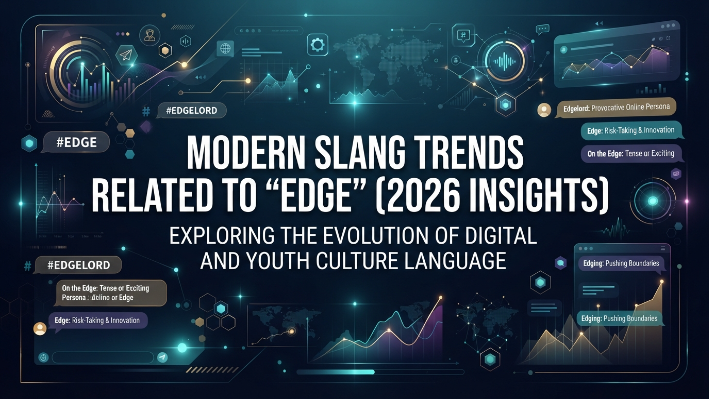
Modern Slang Trends Related to “Edge” (2026 Insights)
The popularity of Edge Meaning Slang shows a bigger change in how people communicate online. In 2026, language moves faster than ever because of social media, gaming culture, and digital communities.
Words like “edge” are no longer used with only one definition. Their meaning shifts based on emotions, trends, and the platform where people use them. This is part of slang evolution, where modern phrases become popular through everyday digital conversations.
Here are some major trends connected to “edge”:
1. Emotion-Driven Communication
People now prefer short words that quickly express strong feelings. Instead of explaining a long emotional state, users choose simple slang terms that create an instant connection.
For example:
“I’m on edge rn 😭”
This short phrase can express anxiety, excitement, nervousness, or anticipation. It shows how emotional expressions have become an important part of online communication.
2. Hybrid Language
Modern internet slang often combines regular English, abbreviations, emojis, and online expressions.
Examples:
- “I’m on edge rn 💀”
- “That was wild fr.”
- “IKYFL 😂”
This mix creates a new style of digital language where people communicate faster and add more personality to their messages.
3. Context-Based Meaning
One of the biggest changes in modern vocabulary is that words don’t always have one permanent meaning. The meaning depends on the situation, audience, and tone.
For example:
- In gaming slang, “edge” can suggest a competitive advantage.
- In personal conversations, it can describe emotional intensity.
- In fashion or personality discussions, it can mean a bold or unique style.
This tone-based meaning makes slang more flexible and expressive.
4. Social Media and Youth Language Growth
Platforms like TikTok, Instagram, and online communities continue to create new slang terms. Gen Z slang and Gen Alpha slang spread quickly through viral internet words and trending expressions.
People use these phrases to build a digital identity and show personality online.
From social media slang to gaming conversations, “edge” represents how communication keeps adapting. Understanding these trends helps you follow modern internet culture and connect better in today’s fast-moving digital world.
Common Mistakes to Avoid
Although Edge Meaning Slang is easy to understand, many people still misuse it because slang depends on context and tone. A word that sounds natural in a casual chat may feel confusing or inappropriate in a formal conversation.
Understanding slang usage, audience, and situation helps you avoid mistakes. Modern communication is not only about knowing words. It is about knowing when and where to use them.
❌ Wrong Usage:
Using slang in formal situations
Using casual slang in emails, business reports, or professional discussions can make your message sound less polished.
Example:
“Your project has a cool edge, bro.”
Better:
“Your project has a unique advantage.”
Overusing slang expressions
Adding too many trending slang words can make a message feel unnatural. Slang works best when it fits the conversation.
Ignoring context and tone
The meaning of “edge” changes depending on the situation. Using the wrong interpretation can create confusion.
✅ Correct Approach:
Match the tone with the situation
Use casual expressions with friends and online communities. Choose professional alternatives for workplace communication.
Understand the context
Before using slang, think about the meaning behind it. Ask yourself whether it matches the conversation.
Keep your language natural
Good communication feels effortless. Use slang when it adds personality, not when it feels forced.
By understanding appropriate language use and conversation awareness, you can use modern slang confidently. Whether you are chatting online, posting on social media, or writing professionally, the right language choice makes your message clearer and more effective.
Why Understanding Slang Like “Edge” Matters in 2026
In 2026, communication is changing faster than ever. New slang terms appear every day through social media, gaming communities, and online conversations. Understanding words like Edge Meaning Slang helps you follow modern discussions and connect with different generations.
Slang is more than just random internet words. It reflects emotions, creativity, and the way people express their identity online. Terms like “edge” show how language can carry different meanings depending on culture, platform, and personal style.
Knowing modern slang helps you:
- Communicate naturally
Understanding popular slang phrases makes digital conversations easier to follow. - Understand online culture
Social media slang and trending expressions often spread through memes, videos, and online communities. - Build stronger connections
Using the right words helps you relate better with others and understand their feelings. - Improve digital communication skills
Knowing when to use casual language or professional vocabulary creates better conversations.
Today, digital language plays a major role in how people interact. A simple word like “edge” can express excitement, tension, confidence, or a bold personality.
Learning slang also improves your language adaptation skills. It helps you understand how words transform over time and why certain expressions become popular.
Whether you are reading social media posts, joining gaming conversations, or chatting with friends, understanding slang like “edge” keeps you connected with modern communication trends. It helps you recognize the meaning behind words instead of just reading them.
Advanced Insight: The Psychology Behind “Edge”
From a linguistic perspective, the popularity of Edge Meaning Slang shows how people use words to express complex emotions in a simple way. A single word like “edge” can represent excitement, tension, confidence, or a powerful emotional reaction.
The psychology behind slang is connected to human expression. People naturally search for quick ways to share feelings, especially in fast-paced digital conversations. Instead of explaining every emotion, they choose words that create an instant understanding.
The word “edge” works because it creates a strong mental image. It can suggest being close to a limit, feeling intense emotions, or standing out from others.
For example:
Instead of saying:
“I feel nervous and excited while waiting for this result.”
People may simply say:
“I’m on edge.”
The meaning stays clear, but the expression feels faster and more relatable.
Why “Edge” Creates Emotional Impact:
- Emotional recognition:
The word helps people quickly identify feelings like tension, excitement, or anticipation. - Personality expression:
It can describe someone’s bold personality, unique style, or fearless attitude. - Social connection:
Shared slang creates a sense of belonging among online communities. - Meaning transformation:
Slang words often change as new generations use them in different ways.
In modern internet culture, words are not just tools for communication. They represent moods, identities, and experiences. The evolution of “edge” shows how modern vocabulary continues to adapt through social media trends, digital identity, and human creativity.
Understanding this language psychology helps explain why certain slang terms become popular while others disappear. Words that feel emotional, relatable, and easy to share often become part of everyday online language.
FAQ’s
What does edge mean in modern slang?
The Edge Meaning Slang describes confidence, intensity, style, or strong emotions depending on the situation and conversation tone.
How is edge used in texting?
People use Edge Mean Slang in texting to express excitement, tension, nervousness, or a feeling that stands out.
Does edge have different meanings online?
Yes, Edge Meaning Slang changes across social media, gaming, and chats because context decides the actual meaning.
What does being on edge mean?
Being on edge means feeling nervous, excited, or tense. Edge Mean Slang often shows emotional intensity in conversations.
Is edge a Gen Z slang word?
Many Gen Z users use Edge Meaning Slang to describe bold styles, unique personalities, and expressive online communication.
Can edge be used professionally?
In professional settings, Edge Mean Slang may become competitive edge or strategic advantage with a more formal meaning.
Why does slang like edge keep changing?
The Edge Meaning Slang evolves because internet culture, social media trends, and digital conversations constantly create new expressions.
Conclusion
Edge Meaning Slang helps people understand how online words change with time. Edge Mean Slang explains emotions, styles, and digital conversations in simple ways. Today, Edge Meaning Slang connects with modern internet culture and everyday chats.
Many users search for edge meaning slang while learning new expressions like what does type shi mean and my roman empire meaning. These trends show how language grows online. Even creative topics like similes for chocolate and similes for happiness appear in modern discussions.
Learning Edge Meaning Slang makes communication easier and clearer for everyone. Edge Mean Slang is not only about words but also feelings and connections. Understanding Edge Mean Slang helps people follow modern trends and express ideas with confidence in daily conversations. It keeps language fresh and shows how digital expressions grow through creativity, culture, and shared online experiences across generations.