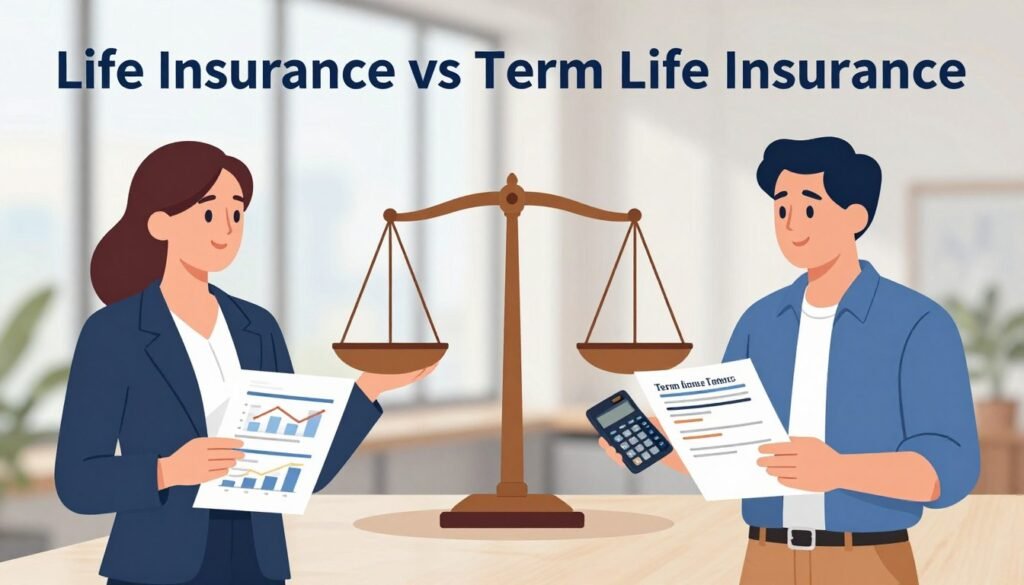
Planning for your family’s future can be hard. Many people struggle to choose the right protection. Knowing the difference between Life Insurance vs Term Life Insurance: Which One Should You Choose? is key to securing your family’s future.
Finding the right policy is not easy. It needs a plan that fits your goals and budget. By looking at your needs, you can choose wisely and feel secure.
This guide explains the main differences between these options. We want to make it simple so you can feel sure about your choice. Protecting your loved ones now means a strong future for them.
Key Takeaways
- Financial planning needs a plan that fits your family’s needs.
- Knowing the policy differences is key for managing wealth.
- Your coverage should match your budget and goals.
- Custom plans protect better than generic ones.
- Choosing wisely today means a stable future for your loved ones.
Understanding the Basics of Life Insurance
Life insurance is a promise to help your family when you’re gone. It’s a financial safety net for them. Starting a life insurance comparison is the first step to peace of mind.
Defining the Core Purpose of Coverage
The main goal is to give a tax-free death benefit to your chosen people. This money helps your family keep their lifestyle when you’re not there. Knowing the life insurance benefits helps you choose what’s best for your family.
Most policies help replace lost income or cover big expenses. They can help pay off a mortgage or fund education. It’s a way to protect your family’s wealth and keep them stable.
The Role of Beneficiaries and Death Benefits
Beneficiaries are the people you pick to get the policy money. Picking the right person is very important. When you pass away, the insurance company pays the death benefit to them.
This money helps with final costs like funerals or medical bills. It also helps with long-term planning. Here’s how these parts work together for security.
| Component | Primary Function | Key Benefit |
|---|---|---|
| Death Benefit | Financial payout | Tax-free support |
| Beneficiary | Recipient of funds | Direct protection |
| Policyholder | Owner of contract | Peace of mind |
| Premium | Cost of coverage | Maintains policy |
Life Insurance vs Term Life Insurance: Which One Should You Choose?
Choosing the right insurance starts with knowing what you need. Think about your life stage and future plans. This helps you pick the best option for your family.

Identifying Your Primary Financial Objectives
Do you need coverage for a short time or forever? Many pick term policies for things like mortgages or college costs. This helps manage financial risks when you earn the most.
Others want coverage for life. Knowing the difference between life insurance and term life insurance is key for planning ahead. If you’re thinking about estate planning or leaving a legacy, a permanent policy might be right for you.
Assessing Your Risk Tolerance and Budget
Your budget affects your policy choice. Term policies are cheaper but expire. You need to be okay with that.
Think about how much you can spend each month. The life insurance vs term life insurance choice depends on your budget and long-term goals. The difference between life insurance and term life insurance often comes down to balancing your budget with your need for security.
| Feature | Term Life Insurance | Permanent Life Insurance |
|---|---|---|
| Coverage Duration | Fixed (e.g., 10-30 years) | Lifetime |
| Cost | Lower premiums | Higher premiums |
| Cash Value | None | Accumulates over time |
| Primary Use | Income replacement | Estate and legacy planning |
Deep Dive into Term Life Insurance
Looking for a simple and affordable way to protect your family? Term life insurance is a great start. It offers essential financial security when your family needs it most.
How Term Life Insurance Benefits Work
Term life insurance works in a straightforward way. You choose a term, like 10, 20, or 30 years. Your premiums stay the same, keeping your budget steady.
If you pass away during the term, your loved ones get a death benefit. This term life insurance benefit is tax-free. It can help pay for things like your mortgage, education, or daily needs.
“The beauty of term insurance lies in its ability to provide maximum protection for the lowest possible cost during your most vulnerable years.”
Advantages of Choosing Term Coverage
When looking at insurance options, it’s good to know the differences. Here’s why many choose term life first.
| Feature | Term Life Insurance | Permanent Insurance |
|---|---|---|
| Cost | Low/Affordable | Higher |
| Duration | Fixed Term | Lifetime |
| Complexity | High Transparency | Complex |
Term life insurance has many term life insurance advantages. It lets you match your coverage to your financial needs. This could be the years left on your mortgage or until your kids graduate.
Affordability for Young Families
Young families often have tight budgets but need protection. Term policies offer a high death benefit at a lower cost.
This cost-effective approach helps families protect their future without giving up their current lifestyle. It’s a smart choice for those who want to cover a lot but keep costs low.
Simplicity and Transparency
Many people like how simple term policies are. There are no hidden investments or complex cash values.
You just pay your premium and know your family is safe. This transparency makes it easy to see what you’re getting and what your loved ones will receive.
Exploring Permanent Life Insurance Options
Looking into permanent life insurance shows a world of tools for long-term safety. These policies last your whole life if you keep paying premiums. They give lifelong protection and can grow in value over time.

Whole Life Insurance Explained
Whole life insurance is a classic choice. It has fixed premiums that never go up. It also has a cash value part that grows at a set rate.
This makes it stable and popular. You can borrow from the cash value for emergencies. It’s a solid base for planning your estate for the long term.
Universal Life Insurance Features
Universal life insurance is more flexible than whole life. You can change your premiums and death benefit as needed. This makes it a favorite for those who like to plan ahead.
The cash value earns interest based on market rates. If your policy does well, you might have more ways to manage costs. It’s great for those who want customizable protection that grows with them.
Variable Life Insurance Considerations
Variable life insurance adds an investment twist. Your premiums go into investment accounts, like mutual funds. This means your cash value and death benefit can change with your investments.
This option could grow faster, but it’s riskier. You need to be okay with market ups and downs. It’s best for those who like to mix insurance with investing.
Key Differences in Premiums and Costs
When you start looking for coverage, the price is the first thing you see. It’s important to know how life insurance premiums are figured out. This helps you pick a policy that protects your family without costing too much.
Different policies meet different needs, and their prices show that. By understanding how these payments work, you can match your insurance with your financial goals.
Why Term Life Insurance Premiums Are Lower
Term policies cover you for a set time, like 10, 20, or 30 years. They don’t have a cash value or last forever, so term life insurance premiums are cheaper.
You pay for the chance of dying in that time. If you live past the term, the coverage ends, and no money is paid out. This makes it a good choice for young families or those watching their budget.
The Long-Term Cost Structure of Permanent Policies
Permanent insurance, like whole or universal life, covers you for life. It costs more at first because it has a savings part called cash value.
“The bitterness of poor quality remains long after the sweetness of low price is forgotten.” — Benjamin Franklin
The cash value grows over time, raising the policy’s cost. Even though it costs more upfront, these plans offer lifelong protection and future value.
| Feature | Term Life | Permanent Life |
|---|---|---|
| Initial Cost | Lower | Higher |
| Cash Value | None | Accumulates |
| Duration | Fixed Term | Lifetime |
Deciding between these options means looking at your current income and future needs. Finding a balance between now and later is key to a good financial plan.
Comparing Coverage Duration and Flexibility
Choosing between a temporary safety net and a lifelong financial commitment is big. The length of your policy affects your financial future. Think about how long you need term life insurance coverage to protect your family.
The Fixed Nature of Term Life Insurance Coverage
Term policies last for a set time, like 10, 20, or 30 years. They’re great for covering short-term needs, like a mortgage or college years. But, when the term ends, the coverage stops unless you renew or convert it.
Term policies are good for saving money when you’re earning a lot. But, if your health changes, getting new term life insurance coverage later might be hard or expensive. It’s key to plan ahead to avoid being left without protection when you need it.
Lifetime Protection with Permanent Policies
Permanent life insurance lasts your whole life if you keep paying premiums. It gives your loved ones a death benefit no matter when you pass. It’s great for leaving a financial legacy or covering final costs.
Permanent policies offer more flexibility and peace of mind than term plans. They ensure you won’t outlive your coverage or face high costs due to age or health. This makes them a key part of long-term planning and wealth transfer.
Cash Value Accumulation and Investment Potential
Permanent life insurance is more than just a safety net. It’s a chance to grow your money for the future. It’s not just about the death benefit.
These policies have a savings part. This lets your wealth grow over time. They’re great for those who want insurance to help with money planning.
How Permanent Policies Build Equity
When you pay for a permanent policy, some money goes into a cash value account. This account grows without taxes, building your equity. You can use this money while you’re alive.
People use this cash for extra retirement money or unexpected bills. You can even borrow against the policy. This gives you valuable liquidity when needed.

Comparing Term Life vs Whole Life Investment Aspects
Term life and whole life are very different. Term life is for pure protection. It covers you for a set time but doesn’t grow your money.
Whole life is a financial asset. It costs more, but your cash value grows. Your choice depends on whether you want cheap, short-term coverage or a long-term investment.
Your choice should match your financial goals. If you want a policy that grows with you, permanent coverage is a good choice.
Evaluating Your Financial Goals and Needs
When you start looking for choosing the right life insurance, think big. It’s not just about coverage. It’s about keeping your family safe and stable. Your policy should grow with you and your family’s needs.
By planning ahead, you make sure your family is protected. This way, you can focus on your dreams without worry.
Protecting Income During Peak Earning Years
Your family counts on you most when you’re earning the most. This is when income replacement is key. Your policy should keep your family’s lifestyle the same if you’re not there.
Choosing the right policy is crucial. Term insurance is often the best choice for high-earning years. It offers strong protection at a lower cost. This way, your family stays safe when they need you most.
Estate Planning and Wealth Transfer Strategies
Later in life, you might focus on keeping your wealth safe. Permanent life insurance is great for choosing the right life insurance then. It helps with estate taxes and leaves a tax-friendly gift for your heirs.
Adding a permanent policy to your plan makes wealth transfer easier. This helps minimize the burden on your loved ones. It also ensures your assets go where you want them to. This gives you and your family peace of mind for years to come.
Tax Implications of Different Policies
Knowing how taxes affect your policy is key to your wealth plan. Many focus only on premiums and coverage. But, the tax side of your plan is very important.
Good choices today can save you money later. This is a critical component of your plan’s value.

Tax-Advantaged Growth in Permanent Insurance
Permanent life insurance, like whole or universal life, has big benefits. A main plus is the tax-deferred growth of the cash value. This means you don’t pay taxes on the growth each year.
So, your money grows faster without taxes. This tax-advantaged environment makes your policy a strong tool for planning. You can use policy loans, which are usually tax-free if done right.
“The power of tax-deferred growth is one of the most underutilized assets in personal finance, turning simple insurance into a robust wealth-building vehicle.”
Death Benefit Taxation Rules
The death benefit is a big comfort of life insurance. In the U.S., the money your heirs get is income tax-free. This means they get the full amount you wanted for them.
But, there’s a catch. If you own the policy, the death benefit might be taxed. This could cut down what your heirs get. Many people work with advisors to avoid these potential tax liabilities.
Always check your policy with a tax expert. This ensures your plan fits current laws. Good planning keeps your legacy safe and your heirs get the most from your planning.
How to Determine the Right Coverage Amount
Finding the right life insurance is key to protecting your family’s future. It might seem hard, but breaking it down helps. By planning ahead, you make sure your family is safe.
Calculating Debt and Future Obligations
First, list all your debts. This list is the base for how much coverage you need. Your policy should clear these debts so your family isn’t stressed.
Include these in your list:
- Outstanding mortgage balances on your home.
- Personal loans, like auto loans or credit card debt.
- Future education costs, like college tuition for kids.
- Final expenses, like funeral costs and fees.
Add these numbers together for a starting point. This total shows the financial burden left if you’re not there.
Factoring in Inflation and Cost of Living
Don’t just look at today’s prices. Think about the future too. Money’s value goes down over time. A policy today might be worth less in twenty years.
So, plan for your family’s future costs. Consider:
- The rising cost of things like food, utilities, and healthcare.
- The need to replace your annual income for a few years.
- Changes in your family’s lifestyle or goals.
Adding a buffer to your policy helps protect your family. Planning ahead keeps your coverage strong and relevant, giving you peace of mind.
Common Pitfalls When Selecting a Policy
Choosing the right life insurance policy is a big step. Many people rush through it. This can lead to mistakes that hurt their family’s future.

Underestimating Future Financial Needs
Many people only think about their current debts or income. But life changes fast. Your policy should grow with your family’s needs.
Think about these things when figuring out how much coverage you need:
- Future education costs for kids or grandkids.
- Potential increases in the cost of living and inflation.
- Long-term mortgage balances or other big loans.
- The loss of a secondary income that helps your family.
It’s better toslightly overestimate your needs. Review your policy every few years. This keeps your protection up to date with your life and goals.
Ignoring Policy Riders and Exclusions
Many people only think about the death benefit. But riders and exclusions are important too. Riders add extra features to your policy. Ignoring them can mean missing out on important protections.
Some riders that offer extra peace of mind include:
- Waiver of Premium: Keeps your policy active if you become disabled.
- Accelerated Death Benefit: Lets you use funds if you have a terminal illness.
- Accidental Death Benefit: Adds extra coverage if death is from an accident.
Always check the exclusions section. Some policies might not cover certain things. Knowing this can prevent surprises. It makes sure your coverage works as expected when you need it most.
Navigating the Application and Underwriting Process
Getting your protection means going through the application and underwriting steps carefully. This part might seem hard, but it’s just the insurance company checking risks for you. Knowing these steps helps you feel confident and clear.
Medical Exams and Health Classifications
Most policies need a medical exam to check your health. A doctor usually comes to your place to take your blood pressure, height, weight, and blood. This info helps the insurer know your health classification.
Your classification affects your premium rates. Healthy people often get “preferred” or “super preferred” ratings, which means lower costs. But, some health issues might mean a “standard” rating. Still, you can get the coverage you need.
“The best time to plant a tree was twenty years ago. The second best time is now.”
Comparing Term Life Insurance Quotes Effectively
When you start looking, you’ll see term life insurance quotes differ a lot. To find the best deal, compare them right. Make sure each quote has the same coverage and term length for a fair comparison.
Here’s a table to show how different things affect your quotes:
| Factor | Impact on Premium | Actionable Tip |
|---|---|---|
| Age | Higher with age | Apply as early as possible |
| Health Status | Significant impact | Maintain healthy habits |
| Coverage Amount | Directly proportional | Calculate needs precisely |
Always check the details before you decide. By getting many term life insurance quotes and comparing them, you make sure your protection is good and affordable. Taking these steps now brings peace of mind for your loved ones.
Conclusion
Choosing between term and permanent life insurance is important. You need to think about your goals and budget. Each policy, like those from Northwestern Mutual or New York Life, has its own benefits.
Your choice affects your family’s future. Term insurance is cheaper when you’re earning more. Permanent insurance grows in value and covers you forever for estate planning.
Look at your money now and your future plans. This helps you choose the best insurance. Keeping your family safe gives you peace of mind.
Talk to a financial advisor about your needs. This ensures your family is protected, no matter what. Pick the right insurance for your life today.